
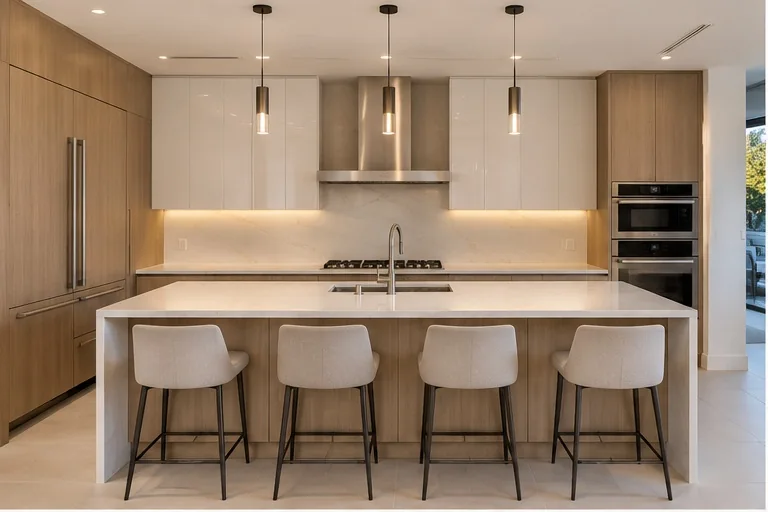
Separate the cabinet box from the door finish.
The box forms the cabinet body; the doors and drawer fronts create much of what you see when the cabinetry is closed. A wood-look front does not by itself tell you which box material is inside. When comparing proposals, ask for both to be named.
Luna Cabinets’ box options include ¾-inch melamine-finished particleboard and ¾-inch maple plywood. Confirm the material, interior finish, and any exposed ends in your proposal. Neither a website photograph nor a finish name replaces the written specifications for your project.
Choose the interior color as its own step.
Our kitchen guide shows Grey, White, and Maple interior options. Think about how the inside of the cabinets will sit alongside your selected fronts when doors and drawers are open. Ask to see the proposed combination in person and confirm which interior finish is available with the box material you select.
Review the storage layout at the same time. A pantry pullout, cookware drawer, and cabinet with shelves serve different items. Start with what needs to fit rather than using the interior color as a substitute for a storage plan.
Use real projects to compare the front materials.
Three completed kitchens offer different material references:
- Newport Beach: oak veneer cabinetry paired with white upper cabinets and a light island surface.
- Irvine: REHAU laminated panels with pale wood-look fronts and dark work surfaces.
- Huntington Beach: high-gloss PET panels in a white contemporary kitchen.
These photographs show finished rooms, while a physical sample lets you review the actual surface you are considering. Compare it with your countertop, flooring, backsplash, and lighting. Wood grain, sheen, and color can look different on a screen; confirm the final choice with a physical sample.
Browse the door finish collection to prepare a shortlist. If you want to combine materials, identify which fronts use each finish and how the transition should look.
Decide how the cabinets should open.
With Handles: choose from various handle colors and styles. Discuss the handle position and proportion on tall doors, smaller doors, and drawers. Review the hardware alongside the finish sample.
Gola recessed profile: a recessed profile creates a grip space behind the edge of the cabinet front. Review how the profile will run through each cabinet arrangement and which details will remain visible.
J Handle: an integrated grip recess runs along the edge of the door or drawer front. Discuss how that detail works across adjacent fronts and where grip access is needed.
Our opening style section shows the three directions. Confirm the selected detail across the full layout, including appliance fronts and corners, rather than choosing from one photograph alone.
Check the details that meet the rest of the room.
Review appliance dimensions and manufacturer requirements, door and drawer movement, nearby walls, and any planned pullouts. Bring the appliance information you have to the consultation. Final measurements and the cabinetry specifications need confirmation before production.
Ask for the approved box material, interior color, front material, opening style, and accessories to appear together in the proposal. For care and cleaning, follow the instructions for the specific surface selected for your project.
Bring your shortlist to the showroom.
Choose a few finishes and opening styles to discuss, bring room photographs or plans, and tell us how you use the kitchen. If you are still setting the allowance, our cabinet budget guide explains the typical $15,000–$60,000 range and the scope questions to ask.
Schedule a consultation at our Fullerton showroom, 1016 E Elm Ave, Fullerton, CA 92831. Visits are by appointment.